
Sehhilfe Private Insurance in Germany: Expat Guide
Sehhilfe private insurance is defined as coverage within German private health insurance that reimburses the cost of vision aids, including glasses and contact lenses, when a licensed eye care professional confirms medical necessity. For expats in Germany, understanding what is sehhilfe private insurance matters because statutory health insurance leaves most adults paying out of pocket for vision care. Private plans under private health insurance offer broader reimbursement, fewer restrictions, and higher coverage caps. Myhealthcarebroker works with expats daily to match them with private health insurance tariffs that include meaningful sehhilfe benefits, cutting through the German-language paperwork that trips most newcomers up.
What types of vision aids does sehhilfe private insurance cover?
Private health insurance covers a defined range of vision aids, and the list is broader than most expats expect. The core category is corrective lenses, including single-vision, bifocal, and progressive lenses for glasses. Frames may also be reimbursed depending on your tariff, though coverage for frames varies more than for lenses. Beyond glasses, contact lenses are covered under private insurance when medically necessary, such as when glasses cannot be worn due to an occupational or health reason.
For benefits beyond glasses, such as hospital stays and dental care, see everything private health insurance covers.

Medical necessity is the central concept in private vision care plans. An ophthalmologist or optometrist must document that the aid is required to correct a diagnosed vision impairment. Private health insurance reimbursements depend strictly on the tariff chosen and the documented criteria, so a prescription alone is not always sufficient. Your insurer may also require a specific diagnosis code or a letter from your eye doctor explaining why a particular aid is necessary.
Common vision aids covered under private insurance plans include:
- Corrective glasses lenses (single-vision, bifocal, progressive)
- Frames, subject to tariff-specific reimbursement caps
- Contact lenses, when glasses are medically unsuitable
- Low-vision aids for severe impairments, such as magnifying glasses or specialized optical devices
- LASIK and refractive surgery, covered under higher-tier tariffs in some cases
Pro Tip: Always get written confirmation from your ophthalmologist that your vision aid is medically necessary before purchasing. Submitting that letter with your claim reduces the chance of a reimbursement dispute.
How does sehhilfe coverage compare to statutory health insurance?
The gap between private and public health insurance coverage for vision aids is significant, and most expats underestimate it until they get their first optician's bill. Statutory insurance restricts coverage for adults to severe vision impairments only, and even then, it pays only for lenses at fixed rates. Frames are almost never covered under public health insurance for adults. Children under 18 receive full coverage, but adults bear the majority of costs themselves unless they can prove a severe impairment.
The fixed reimbursement rates under public health insurance are low by any measure. Statutory rates for glasses lenses range from €10 to €112 per lens, depending on the prescription strength. That ceiling rarely covers the actual cost of quality lenses in Germany, where a single progressive lens can cost €200 or more. Private insurance, by contrast, reimburses based on the actual invoice amount up to the tariff's stated limit, which is typically far higher.
| Feature | Statutory insurance | Private insurance |
|---|---|---|
| Adult lens coverage | Only for severe impairments | Covered with medical necessity |
| Frame coverage | Rarely covered | Covered under most tariffs |
| Reimbursement basis | Fixed rates (€10–€112 per lens) | Actual invoice, up to tariff cap |
| Contact lens coverage | Not covered for adults | Covered when medically necessary |
| LASIK coverage | Not covered | Covered under select tariffs |
| Co-payment structure | 10% per aid, min €5, max €10 | Varies by tariff |
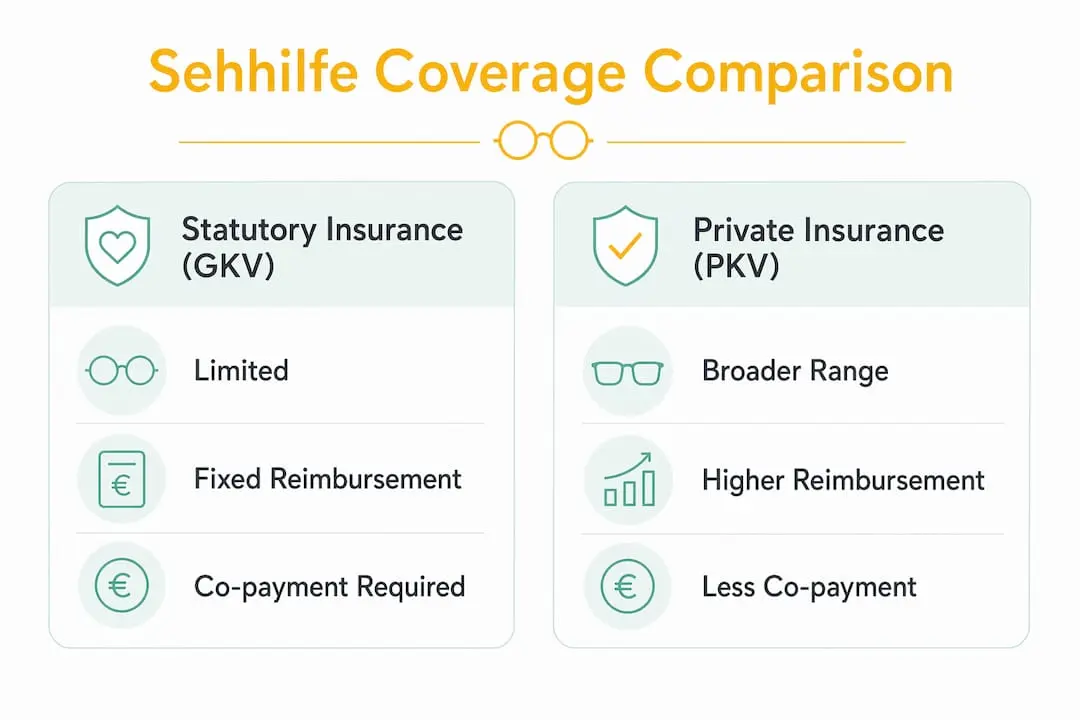
Statutory insurance enforces co-payments of 10% per aid, with a minimum of €5 and a maximum of €10 for adults. Private insurance co-payment structures differ by tariff and often result in higher net reimbursements overall.
Pro Tip: When comparing private health insurance tariffs, ask specifically for the sehhilfe reimbursement cap per year and whether it resets annually or applies over a multi-year period. Some tariffs cap at €300 every two years, while others offer €600 per year.
What is the typical claim process for sehhilfe private insurance?
The claim process under private insurance works differently from what most expats expect if they have experience with public systems in other countries. Private insurance rarely covers costs upfront. You pay the optician or ophthalmologist directly, then submit your documents to the insurer for reimbursement. That timing gap matters, especially for expensive progressive lenses or specialty contact lenses.
The standard claim process follows these steps:
- Get a prescription. Visit an ophthalmologist or licensed optometrist and obtain a written prescription confirming your diagnosis and the required correction.
- Obtain a medical necessity statement. Ask your eye doctor to provide a brief letter or form confirming that the vision aid is medically required. This is separate from the prescription itself.
- Purchase the vision aid. Buy your glasses, lenses, or other aid from a qualified optician. Keep the itemized invoice, which must list each component separately (frames, lenses, coatings).
- Submit your claim. Send the prescription, medical necessity statement, and itemized invoice to your insurer. Most private health insurance providers accept digital submissions through their app or online portal.
- Await reimbursement. Processing times vary by insurer, but most private health insurance providers settle straightforward claims within two to four weeks.
Understanding timing and paperwork is critical for expats, because incomplete submissions are the most common reason for delayed or denied claims. A missing itemized invoice or a prescription without a diagnosis code can push your reimbursement back by weeks. Double-check your tariff's documentation requirements before you visit the optician, not after.
What are the practical benefits and limitations of sehhilfe private insurance for expats?
Private vision care plans offer real advantages for expats, but the benefits depend heavily on which tariff you choose. Higher-tier private health insurance tariffs often include broader coverage, including LASIK reimbursement and higher annual caps. Entry-level tariffs may cover only basic lenses with modest limits. The difference in annual premiums between these tiers is often smaller than expats assume, making it worth comparing carefully before signing.
Key benefits of private insurance for vision aids include:
- Higher reimbursement ceilings than public health insurance fixed rates, covering real-world lens costs
- Frame coverage that statutory insurance does not provide for adults
- Contact lens reimbursement when medically justified, which public health insurance denies for adults
- Access to premium lens options such as progressive or anti-reflective coatings within the reimbursed amount
- Potential LASIK coverage under select higher-tier tariffs
The limitations are equally worth knowing. Private insurance treats vision aids as medical necessities, not lifestyle choices. That means fashion frames or non-prescription sunglasses will not qualify. Coverage for contact lenses as a personal preference rather than a medical need is also excluded. You need documented medical justification for every claim.
Many expats overlook the need to verify that their private health insurance tariff explicitly includes sehhilfe coverage before buying vision aids. This oversight leads to denied reimbursements and unexpected out-of-pocket costs. Read your tariff's benefits schedule before your optician appointment, not after you have already paid. If you are still choosing a plan, Private health insurance options for expats vary widely in how they handle vision aid coverage.
Key Takeaways
Private health insurance provides meaningfully better vision aid coverage than statutory insurance for adults in Germany, but only when you choose the right tariff and document medical necessity correctly.
| Point | Details |
|---|---|
| Medical necessity is required | An ophthalmologist or optometrist must confirm your vision aid is medically needed before you claim. |
| Private health insurance outperforms public health insurance for adults | Statutory insurance pays fixed rates of €10–€112 per lens; private insurance reimburses actual costs up to your tariff cap. |
| Tariff selection determines value | Higher-tier private health insurance tariffs include LASIK, frames, and contact lenses; entry-level plans may cover only basic lenses. |
| Pay first, claim second | Private insurance requires you to pay upfront and submit an itemized invoice, prescription, and medical necessity letter. |
| Verify coverage before purchasing | Confirm your tariff includes sehhilfe benefits before visiting the optician to avoid denied claims. |
What expats get wrong about sehhilfe coverage
The most common mistake is expats assuming their private health insurance plan automatically covers glasses the same way their home country's insurance did. Germany's private insurance system is tariff-specific in a way that surprises almost everyone. Two people on the same insurer's platform can have completely different sehhilfe benefits depending on which tier they selected when they enrolled.
A second thing most newcomers miss is the contact lens distinction. People assume that if glasses are covered, contacts are too. They are not, unless you can show that glasses are medically unsuitable for your situation. Some expats pay full price for a year's supply of contact lenses because they did not get that one-line letter from their eye doctor before submitting the claim.
Treat your tariff's benefits schedule like a contract, because it is one. Read the sehhilfe section before you need it. If you are still choosing a plan, compare private health insurance plans with someone who reads these documents every day. The difference between a tariff with a €300 two-year cap and one with a €600 annual cap is real money over time, and it rarely shows up in the headline premium comparison.
How Myhealthcarebroker helps you get the right vision coverage
Choosing a private health insurance tariff that genuinely covers your vision care needs is harder than it looks. The sehhilfe section of most tariff documents runs to dense German text, and the differences between plans are easy to miss without experience reading them.
Myhealthcarebroker is an independent advisory service that compares private health insurance plans across providers in plain English, with no ties to any single insurer. The team reviews sehhilfe coverage terms as part of every plan comparison, so you know exactly what you are getting before you sign. Whether you are checking your private health insurance eligibility for the first time or switching tariffs, Myhealthcarebroker makes the process straightforward and free of surprises. Get in touch to find a plan that covers your eyes as well as everything else.
 Written and reviewed byBettina Ostermann