
Compare Private Health Plans in Germany: 2026 Guide
Private health insurance in Germany, known formally as Privatekrankenversicherung, is a funded, individual risk model that operates entirely outside the statutory system. When you compare private health plans in Germany, you are evaluating premiums based on your age, health status, and chosen coverage level, not your income. For expat employees and professionals earning above the legal threshold, this distinction changes everything about how you budget, plan for your family, and access care. This guide walks you through eligibility, coverage differences, cost structures, and the decision factors that matter most for your situation.
Who can access private health insurance in Germany?
Eligibility for private health insurance is not open to everyone. Employees must earn over €77,400 gross annually in 2026, which works out to €6,450 per month, to qualify for private health insurance. That threshold is called the Jahresarbeitsentgeltgrenze (JAEG), and crossing it for one consecutive year is the minimum requirement before you can opt out of statutory coverage.
Self-employed professionals and civil servants (Beamte) operate under different rules. Freelancers and the self-employed can join private health insurance from day one, regardless of income. Beamte receive a government subsidy called Beihilfe that covers a portion of their medical costs, making private health insurance the standard choice for that group. Students under 30 also have access to discounted private health insurance tariffs.

Switching back to public health insurance once you are in private health insurance is legally restricted. After age 55, returning to public insurance is nearly impossible under standard conditions. Even a drop in income does not automatically qualify you for public health insurance if your employment contract remains unchanged. This is a long-term commitment, not a flexible subscription.
| Profile | Eligible for private health insurance? | Key Condition |
|---|---|---|
| Employee | Yes | Gross income above €77,400/year |
| Self-employed / freelancer | Yes | No income threshold required |
| Civil servant (Beamte) | Yes | Beihilfe subsidy applies |
| Student under 30 | Yes | Discounted student tariffs available |
| Employee below threshold | No | Must remain in public health insurance |
Pro Tip: If you are close to the JAEG threshold, check your [2027 income limit](/blog/private-health-insurance-income-threshold-2027-germany) early. The threshold adjusts annually, and missing it by a small margin keeps you locked in public health insurance for another year.
How does private health insurance coverage differ from statutory insurance?
The coverage gap between private and public health insurance is significant in practice. Public health insurance covers a standardized benefit catalog defined by law, while private health insurance plans vary by tariff and insurer, giving you real choices about what you include and exclude.
The most visible differences show up in hospital care and specialist access:
- Hospital treatment: private health insurance typically covers treatment by the chief physician (Chefarzt), a private room, and free choice of hospital. Public health insurance assigns you to the attending physician on duty.
- Specialist appointments: private health insurance holders generally get faster appointments and direct access to specialists without a GP referral.
- Dental and optical: Many private health insurance tariffs include higher dental reimbursement rates and coverage for glasses or contact lenses. Public health insurance dental benefits are minimal.
- Alternative medicine: Homeopathy, acupuncture, and other non-conventional treatments are often included in private health insurance tariffs. Public health insurance rarely covers them.
- Family coverage: public health insurance offers free family coverage for non-earning spouses and children. Private health insurance requires a separate premium contract per person.
That last point is the most financially consequential for families. A couple with two children in private health insurance pays four separate premiums. Private health insurance is most cost-effective for singles or dual-income households without children. Families with a non-working spouse often find public health insurance cheaper overall, even if the employee earns well above the JAEG.
For households, the guide to private cover for families shows how partners and children fit into the picture.
Health underwriting also applies in private health insurance. Insurers review your medical history for the past 3–10 years. Pre-existing conditions can result in surcharges of 20–30% or outright exclusions from certain benefits. Public health insurance accepts everyone at the same rate with no health questionnaire.
How do you compare costs and premiums for private health plans?
Public health insurance contributions are capped at roughly €1,261 per month for a childless employee in 2026. That figure is the ceiling regardless of how much you earn above it. Private health insurance premiums work differently: they are set at the time you join, based on your age and health, and they do not rise with your salary.
A healthy 30-year-old expat can expect to pay between €275 and €380 per month for a solid private health insurance tariff. That is well below the public health insurance maximum, which is why high earners in good health often save money by switching. The math shifts as you age.
Private health insurance uses a mechanism called Altersrückstellungen (aging reserves) to manage rising healthcare costs. Aging reserves reduce but do not eliminate premium increases over time. Insurers are required by law to build these reserves between ages 21 and 60, and a 10% surcharge is added to premiums specifically for this purpose. The reserves smooth the cost curve but do not freeze it.
| Factor | Public health insurance | Private health insurance |
|---|---|---|
| Premium basis | Percentage of income | Age, health, tariff |
| Monthly maximum | ~€1,261 (2026) | No cap; rises with age |
| Family coverage | Free for dependents | Separate premium per person |
| Aging reserves | Not applicable | Mandatory buildup ages 21–60 |
| Health underwriting | None | Required; affects acceptance |
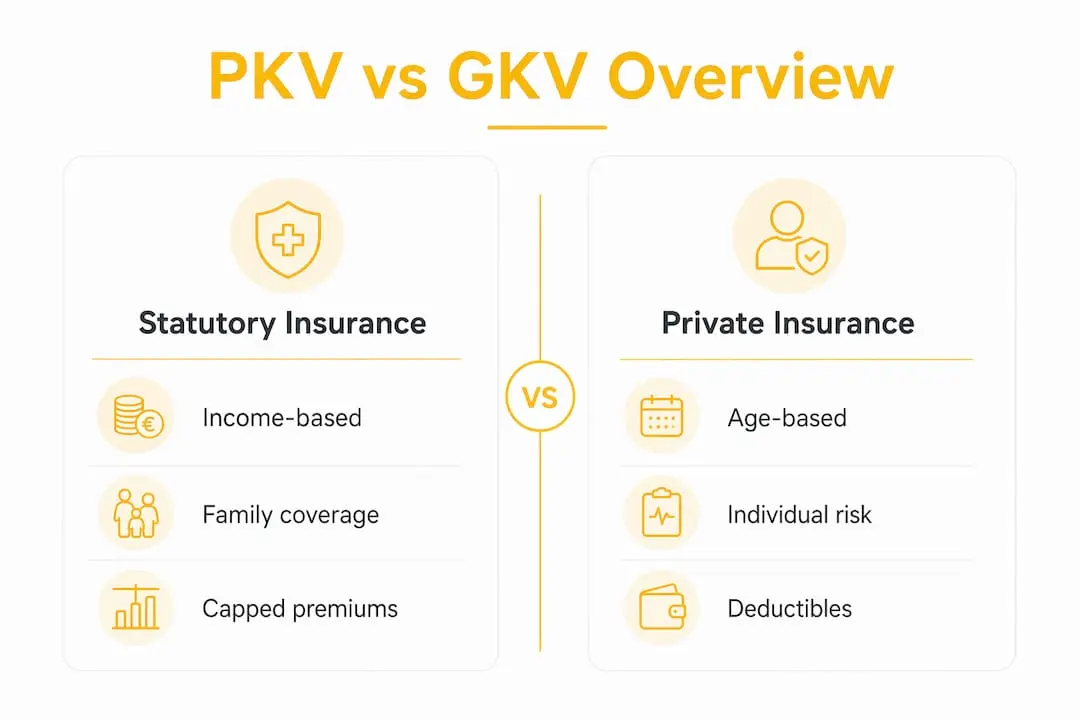
Deductibles (Selbstbeteiligung) are a useful lever in private health insurance. A deductible of €300–€600 per year is generally recommended as a balance between lower monthly premiums and manageable out-of-pocket costs. Going higher than €600 can discourage you from seeking preventive care, which tends to cost more in the long run.
Pro Tip: Switching insurers within private health insurance means losing most of your aging reserves. Changing tariffs within the same insurer preserves them fully. Choose your [private health insurance provider](/private-health-insurance-companies-germany) carefully from the start.
How to evaluate and select the right private health plan as an expat
Selecting the right private health insurance plan requires more than comparing monthly premiums. Work through these steps before signing anything.
- Confirm your eligibility. Check your gross salary against the current JAEG threshold. If you are self-employed, confirm your registration status. Use an eligibility check tool to verify your situation before approaching any insurer.
- Map your coverage needs. List the benefits that matter to you: dental, optical, mental health, physiotherapy, maternity. A tariff that excludes mental health coverage may look cheap until you need it.
- Factor in your family. If you have a non-working partner or children, calculate the total private health insurance cost for all family members. Compare that total against the public health insurance contribution you would pay. The result often surprises people.
- Evaluate insurer quality. Digital-first insurers offer English support and app-based claims processing, which matters when you are filing a claim in a second language. Legacy insurers often require paper forms and German correspondence. For expats, the administrative experience is a real quality-of-life factor.
- Check premium stability history. Ask how much the insurer has raised premiums over the past five years. Financially stable insurers with strong aging reserves raise premiums less aggressively. This information is publicly available through German insurance rating agencies.
- Read the contract terms carefully. Look for tariff flexibility clauses that let you downgrade coverage if your income drops. Understand the waiting periods for specific treatments and the exclusions that apply to your health history.
- Get professional advice. Medical underwriting decisions are binding. A broker who works across multiple insurers, like Myhealthcarebroker, can match your health profile to the insurer most likely to accept you at standard rates.
The most common mistake expats make is underestimating how permanent this decision is. Choosing private health insurance at 35 in good health feels straightforward. Reassessing at 52 with a chronic condition and a non-working spouse is a very different conversation.
What challenges do expats face when switching to private health plans?
The age 55 rule is the single biggest structural risk in private health insurance. Switching back to public health insurance after 55 is legally blocked in almost all cases. German courts have reinforced this, ruling that a partial income drop after a health event does not qualify someone for public health insurance if their employment contract has not fundamentally changed. You need to plan as if private health insurance is permanent.
Other common challenges include:
- Rising premiums with age. Aging reserves soften the increase but do not stop it. Premiums in your 50s and 60s can be substantially higher than your entry rate.
- Loss of reserves when switching insurers. Moving from one private health insurance provider to another means leaving most of your accumulated aging reserves behind. Only a portion transfers under current regulations.
- Administrative friction with legacy insurers. Older, traditional insurers often operate with paper-based processes and German-only communication. This creates real barriers for expats managing claims or disputes.
- Health underwriting on re-entry. If you leave private health insurance and later try to rejoin, you face a new health assessment at your current age and health status. Conditions developed in the interim will affect your acceptance and premium.
Deciding between private and public health insurance involves more than math. Family structure, income stability, and long-term planning are the factors that determine whether private insurance is genuinely the right fit, or just the cheaper option today.
The right private health insurance for expats in Germany is the one that fits your life at 55 as well as it fits your life now. That requires thinking beyond the first-year premium.
Key Takeaways
Choosing between private and public health insurance in Germany is a long-term financial and lifestyle decision that requires careful assessment of eligibility, family structure, and premium behavior over time.
| Point | Details |
|---|---|
| Eligibility threshold | Employees need gross income above €77,400/year in 2026 to access private health insurance. |
| Family cost impact | Private health insurance requires separate premiums per family member, making public health insurance cheaper for families with dependents. |
| Aging reserves matter | Reserves reduce but do not eliminate premium increases; switching insurers forfeits most reserves. |
| Age 55 rule | Returning to public health insurance after 55 is legally blocked in nearly all circumstances. |
| Digital insurer advantage | English-language, app-based insurers reduce administrative friction for expats significantly. |
What expats most often get wrong about private health insurance
The question that comes up most often is: "Should I switch to private?" The honest answer is always the same: it depends on where you plan to be in 20 years.
Most expats focus on the monthly premium comparison and stop there. That calculation almost always favors private health insurance for a healthy single professional in their 30s. What it misses is the compounding effect of decisions made early. The insurer you choose, the deductible you set, and the tariff you select at entry all shape your costs and options for decades.
Digital-first insurers have genuinely changed the experience for expats. English-language onboarding, app-based claims, and responsive customer service are not small conveniences. They are the difference between managing your health coverage confidently and dreading every interaction with your insurer. Expats consistently underestimate this until they have to file a claim.
Family planning is where the most regret shows up. A professional who joins private health insurance at 32, single and healthy, then marries and has two children by 38, often ends up paying significantly more than they would in public health insurance. The free family coverage in statutory insurance is a genuine financial benefit that private health insurance cannot replicate.
The practical takeaway: run the numbers for your actual family situation, not a hypothetical one, and get advice from someone who works across multiple insurers, not just one. The public vs. private comparison is genuinely complex, and the right answer varies more than most people expect.
How Myhealthcarebroker helps you compare private health plans
Comparing private health plans across multiple German insurers, in English, without a background in German insurance law, is genuinely difficult. Myhealthcarebroker is an independent consultancy that works across providers, not for any single insurer, so the advice you receive reflects your situation rather than a sales target.
From your first eligibility check to a personalized quote comparison and final application, Myhealthcarebroker handles the process in clear English. The team assesses your income, health profile, and family structure to match you with the tariff and insurer that fits your long-term needs. For expat employees ready to explore Private health insurance options, professional guidance makes the difference between a good decision and an expensive one.
 Written and reviewed byBettina Ostermann